 Back to Conditions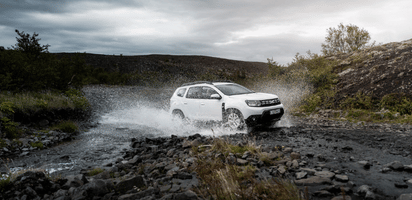
River crossings
No insurance covers river crossings, drivers cross at their own risk!
F-Road River Crossing Guide
River Crossing Driving in Iceland
River crossings are common on Iceland’s mountain (F-roads) and can be dangerous due to changing water levels, strong currents, and hidden obstacles. These roads are only accessible in summer and require a 4×4 vehicle by law.
Before attempting a crossing, always assess the depth and current, choose the shallowest path, and drive slowly and steadily without stopping. If the water is too deep or conditions feel unsafe, turn around—damage from water is not covered by insurance and can be very costly.
River crossings should only be attempted by confident drivers with the right vehicle and preparation.
Types of River Crossings in Iceland
River crossings in Iceland vary greatly and can change quickly depending on weather and water levels.
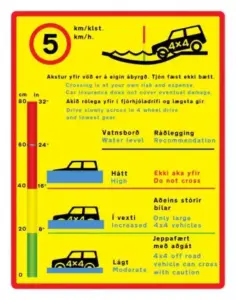
- Very shallow (<20 cm): Usually temporary (after rain or snowmelt) and easy to cross for most vehicles.
- Small (<40 cm): Requires good ground clearance — 4×4 recommended to avoid damage or getting stuck.
- Medium (<70 cm): Common on F-roads and requires a 4×4 SUV with high clearance. Risk of engine flooding.
- Large (70+ cm): Deep, fast-flowing glacial rivers — dangerous and often unsafe to cross.
River Crossing Safety in Iceland
River crossings can be unpredictable and dangerous. Conditions change quickly, so always prepare before attempting one.
Before You Cross (MUST DO)
- Check road conditions at road.is — only proceed if roads are marked passable.
- Stop and assess the river (depth, current, entry/exit points).
- Always choose the shallowest route (usually marked with yellow posts or ropes).
- Use a 4×4 vehicle with high ground clearance.
- Open windows before crossing (for emergency exit).
- Plan your route and have a backup plan.
- If the water reaches the top of your tires, do not cross.
How to Cross Safely
- Drive slowly and steadily (around 10 km/h).
- Stay in low gear (1st or 2nd) and do not change gears mid-crossing.
- Follow markers and drive slightly with the current, not against it.
- If possible, use a spotter outside the vehicle to guide you.
Understanding Water Depth
- Always get out and check before crossing.
- Water levels can change daily due to weather and glacier melt.
- Calm-looking water is often deeper than fast-moving water over rocks.
- Water must stay well below the engine air intake.
- If unsure at any point, turn back.
If Something Goes Wrong
If the engine stalls, do not attempt to restart the vehicle.
Vehicle Stuck
- If safe, exit the vehicle and move to dry land.
- In deeper or fast rivers, stay safe — either remain in the vehicle or move to the roof if necessary.
- Wait for assistance.
Engine Flooded
- Do not attempt to restart the car.
- The vehicle must be recovered and repaired.
Vehicle Damage
- Undercarriage and water damage are common and not covered by insurance.
- Drive cautiously to avoid costly damage.
Important
If conditions feel unsafe, do not take the risk — turn around.